Thursday, June 11, 2015

Shouldn't october be the eighth month?

'Octo'pus has eight hands, 'oct'agenarian is an 80 year old, 'octa'gon is 8 sided. Extending this logic, shouldn't 'octo'ber be the 8th month? Why is it the tenth month? You waive it as, "Maybe it is an exception to the rule. I've seen exceptions before." Hey, but that's not the only anamoly. September with a 'sept' should have been the seventh month not the 9th. December with a 'dec' should've  been the 10th month not the twelfth. Are you guys curious now? Tap your index finger on ur chin ( like my toddler would when he wants me to know he's thinking ) and say,"This story needs further investigation".

The calendar we follow now is called the Gregorian calendar, which a long while ago was called the Julian calendar and which a very long while ago was the roman calendar. It all started with them, the Romans. In fact , Rome was founded by a great guy called Romulus. The roman calendar was named Romulus after him. This calendar had only 10 months, starting from March to December . March being the first month and December being the last and the tenth.  Which is why September, October, November and December stood for 7th, 8th, 9th and 10th month respectively!  The days between December and March were left ungrouped under any month.

As time went by, another king called numa pompilius, added those days under two months, January and February. He didn't bother to rename all the other months. January was derived from the God Janus, the God of doors, meaning beginnings. That made it the first month. Pushing the other months two positions down."Aaahanh, so that's the story" ( for a detailed version of the journey of the calendar from its roman version till the latest one, please refer Wikipedia )


Now as a give away, I give you two other tit bits of information regarding our calendar. July was named after Julius Caesar and August after Augustus ( another king ). And in the first roman calendar  those months were named quintilis and sextilis meaning 5th and 6th month respectively.  Maybe because the calendar had gone through many alterations already, the king called numa left the months September to December intact. Well, that's  a question we might never know the answer to!!

Wednesday, June 10, 2015

The physics I found in a submarine, scuba diving and my son's colouring book!

Submarine is that huge ship that goes into stealth mode by completely diving under the water. It can sink or float at will. Now how is that possible. How can the submarine change its density at will?

Submarines contain tanks called 'ballast tanks' which carry air in them when the submarine needs to float and the tanks get filled with water, when the submarine needs to sink or dive deep. That sounds wonderful isn't it? Being able to change the density to control float and sink.

Now think about this. The submarine was floating on the surface of the sea. It fills its tanks to be able to deep dive. The air in the ballast tanks are replaced by water. The density of the submarine increases. And it slowly starts sinking. Let's say now it's completely submerged and has reached an equilibrium. That is to say, the weight of the object is equal to the upthrust. From this scenario, what does the submarine need to do, to be able to dive deeper. Remember I used the word dive deeper, not sink till the ocean bed.

Will you agree with me if I say, further addition of water will get the submarine to sink? (Because, the upthrust is fixed now that the whole of the submarine is submerged under water) So how does it dive deeper ?

The submarine introduces more water into the ballast tanks slowly at first. The sub would be sinking now. Once they reached the desired depth, they pump the required amount of air into the tanks to be able to reach equilibrium at that point. And they 'hover' there. Hover or flink or achieve neutral buoyancy. All meaning the same!

Yet place where you need to know buoyancy basics to survive is the scuba diving front. By the way, do you know what is scuba? No no not the meaning , but did you know it is an acronym and it stood for Self Containing Underwater Breathing Apparatus. I didn't know that till quite some time back. (Thanks to the all-knowing-wikipedia)

Anyways, that was just an aside. Scuba divers dive into the deep sea. They need to maintain this neutral buoyancy too at a certain depth, to avoid paddling and struggling to maintain the depth. How do they do that? They have oxygen tanks to help them breathe. And some of them have BCD, Buoyancy Controlling Device. Something they wear as a belt apparently. And they either pump in air and increase in volume or expell air and reduce the volume of the diver, thereby altering his bouyancy and helping him maintain nuetral buoyancy.

Also, some of them carry weights with them when they dive in and discard them while surfacing I read somewhere. And did you know, a fat person tends to be in a better position to float than a person with a worked out, toned, muscly body!! Simply because, fat floats!! Alarming isn't it! This is a lovely page on scuba diving, read for more details on the same.


Lot of new stuff we've learn't today. I'm amazed at how much I'm learning from my son's books. You know even a drawing book has had my eyes open wide !! Listen to this interesting story..

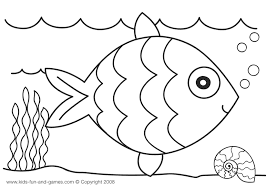
Having a toddler, I've spent millions of hours trying to get him to hold a crayon and colour within the border of his colouring books. A very frequent drawing which recurs is a fish with bubbles out of its mouth. Like in the picture, here. And my son didn't agree with me when I told him those were bubbles coming out of its mouth. He said those were the tiny bits of fish food which his owner has generously dropped down for him to gobble up. Why? For the simple reason that he wasn't convinced why a fish needed to blow bubbles from his mouth. I just let it be. But guyz, do you know why?

Apparently, the goldfish has something called a swim bladder. An organ or a sac filled with air. Just like in the submarines. It helps them float. When they want to swim to the top of the fish tank, they take in more air to their swim bladder. And when they want to go down, they let some air out!  And that is the bubble !! AAhaaaa...

Also, you might have seen some fishies swimming upside down or with a tilted head. It seems, they've had a swim bladder disorder.

Oh.. the wonders of nature !! Never fail to amaze me. The next time you hear the name Archimedes, throw him a salute for having figured the underlying principle. And more importantly, the next time you see a colouring book with bubbles out of a fish, silently say 'aahaaa'. No need to correct your toddler yet. I say it's too soon to burst his bubble!!

Saturday, May 23, 2015

Sink, float and wonderful things about it.

Have you ever wondered how something as huge as a ship could possibly float in water? We tend to think that lighter objects float and heavier objects sink. But, it just takes a small stone and a heavy ship to disprove that thought.

Let's start with simple questions first. When you drop an object into water, what could happen? It could either float or sink. Have you heard of the word called 'flink'? Meaning, neither float or sink. (I don't think it's an actual word though!) The object is fully immersed in water and is neither moving up nor down. Have you seen that ever?

There must be something right, that decides how much each objects gets to get wet, there must be something. And that's what we are going to read further on.

As usual, it all happened when a great guy born like long long ago, called Archimedes, said this :

When you put an object in water, the volume of water it displaces is equal to the volume of the object inside the water. 

Seems logical right. Just keep this in mind. It will come handy a little later in the post. Now, try this simple experiment at home, right now. Take an object that you know floats for sure. ( I took my son's bath duck ) Hold it in your hand and push it deep into a bucket full of water, and let go of it. What happens to it? It comes back up. Who pushes it up? The water. This force of water, or the upward push is called 'upthrust'. Now where is this force when I throw a stone or a coin into the bucket?

It is there, but it isn't enough. What did I just mean?
If the upthrust is more than the weight of the object, the object floats. If the upthrust is lesser than the weight of the object, the object sinks. Sounds elementary isn't it? If the upward force is more than the downward force, the object remains up. If the downward force is more than the upward force, the object goes down. The coin, that sinks, experiences lesser upthrust than its own weight.

How do we measure this upthrust? When everyone else in the world long long ago was puzzled with this one question, our genius, Archimedes came up with a principle, stating that

"Upthrust, that is exerted on a body immersed in a fluid, whether fully or partially submerged, is equal to the weight of the fluid that the body displaces."

So in the coin case, the weight of the water it displaces is lesser than its own weight. Meaning, it is more denser than water. (Density = Mass/Volume.)

So, the density of the object decides the sinking or the floating behaviour. To understand why a ship floats, do this simple experiment at home. Take a vessel, and some spoons and forks. Drop them in a bucket of water. You see the vessel floats, while the spoons and forks sink. The vessel holds air inside it, making it less denser. Which is why a ship floats while a stone sinks.

Let me suggest a tweak to your float-sink experiment. Keep adding salt to your water. See if something changes. What changes? Some objects that previously sank in the water, now float. So the density of the liquid/medium matters. It's the density of the object as compared to that of the liquid it is in that decides the float sink thing.

We've learnt that there is something called upthrust which is an upward force. We also know that archimedes has taught us how to measure upthrust. We also know what makes ships float. We are not happy. We are thinkers. We think, but why does this upthrust exist at all?

The explanation goes on something like this.... In a column of water, the lower layers are under greater pressure than the upper layers. (because the lower layers experience the weight of the upper layers) So when an object is placed in the water, the bottom part of the object experiences more pressure than the top part of it. Which means to say, the object experiences a net pressure from the medium/water in the upward direction. And that is this upthrust. "Aahaa..."

So.. does upthrust increase with water depth then? Technically, once the body is fully immersed, the amount of water it displaces is constant. So the upthrust should also be constant. But we just said the lower layers exert a lot of pressure. So shouldn't there be a lot of upthrust as the body goes deeper?? What is wrong in the statement I just made?

Yes, the lower layers exert a lot of pressure. But upthrust is the difference in pressure experienced by the top and bottom layers of the object. That difference remains a constant! And so does the upthrust.

Now.. have you noticed the behaviour of tall objects, like when I place an empty glass tumbler in water, the tumbler tilts and maybe even topples off. Add some water to the glass, and you see that the glass stabilises. What is this tilt and stability and who do they depend on?

Apparently, there's something called centre of buoyancy and centre of gravity.

Centre of gravity or centre of mass is the one point where the weight of the object seems like it is acting from. Let's say you have a medium size plate in your hand. The centre of gravity will be the spot where you could balance it on your one finger. (perpendicular-ly)
Centre of buoyancy, similarly is the point where the buoyancy force seems like it acts from. That is to say, just consider the part of the object immersed in the water and find its centre point.

If the Centre of gravity is located below the centre of buoyancy, the object wouldn't topple. Do watch this wonderful video from this wonderful website for a lovely animation regarding the very same point.

For the interested, do go through these wonderful TedEd videos about archimedes and the history behind his principle here and here. Nice interesting story! I found them a delight. And for the ever curious minds, read the next post on submarines after having said "Hail Archimedes"!


Sunday, May 3, 2015

Save the turtles.

Today, we are to learn about the endangered turtle species, how to help conserve them and also learn something new and fascinating about them.

A normal morning. After dropping kids in the school, my friends and I decided to let the steam off by getting together for a cup of coffee. "One of my friends (who we fondly call captain, coz she is one, she flies planes!!)   said, "I'm planning to take my kid to the turtle conservatory today. Anyone cares to join?" I hadn't even heard of the conservatory, despite the 4 well spent years in the city. I sent some rapid fire questions her way, in the quest to gather some information. Where? Why? What happens there and stuff. She patiently answered most of them, and she along with the other friend at the table jointly said, " It's a lovely experience, you should come. Do bring your kid along." And boy, am I glad that conversation happened. It was a wonderful experience.

A group of nice minded and like minded people got together and formed an organisation called Students Sea Turtle Conservatory. This is their webpage. Their page has details on how they work. There are seven species of turtles it seems. And they seem to be in the endangered status. Chennai sea coast attracts olive riddley turtles, it says. One of the seven species. These turtle moms, when ready to lay eggs, walk to the shore, dig a hole in the coast, lay the eggs, cover them up and disappear into the sea. When the eggs hatch, the hatchlings come out and find their way back to the sea. The problem in this whole scenario being, there is no control over when the eggs would hatch, as in, the time of the day. As the hatchlings don't yet have a hardened back, and are so vulnerable to attack, they easily fall prey to the crows, eagles, seagulls. Also, itseems sometimes stray dogs dig up the eggs and eat them thereby sending the species towards extinction. Sad isn't it?

It says, the egg laying happens in the december to april period. And during this time, these nice people from the conservatory walk the entire sea coast as a team, and look out for these nests. Carefully dig them out and bury them back in fenced enclosures, thereby protecting them from dogs. After a particular amount of time, they carefully dig the mud around the hole, take the hatchlings out carefully and let them reach the shore after sunset, a time where the birds already found their way back home.

Here's a pic of a volunteer carefully digging up the hatchlings.


This one is a basketful of these tiny little hatchlings ready to go to the sea.


Their final walk.


At the time we went to the hatchery, there were two volunteers. A guy who supervised the whole thing and made sure things happened according to the plan. A girl who so patiently answered all our questions and kept giving us lot of information about these turtles.

I asked the volunteer, "when you guys put it so much effort to take care of the hatchlings, why not leave them in the sea, why are u making them walk the beach? " she said," The hatchlings imprint the beach they were born in while walking. Which means to say, when they have to lay eggs, they come back to the very same stretch of beach." Amazing isn't it?

She told us that we shouldn't touch the hatchlings and cause them discomfort. Because they wouldn't eat for the next two days and need every bit of their energy for swimming. And you know, the gender of the hatchlings depends on the heat the eggs are exposed to. It seems, one can say with a little certainty that the eggs that are towards the centre of the heap have a little more temp than the ones that form the periphery. I asked her why they didn't use incubators to regulate the temperature to make sure the distribution of female turtles were the same as the male ones. She said they didn't want to play God and wanted to help conserve the turtles with minimum intervention possible.

These turtles she said live for quite long like other turtles do. Adult grows upto 24 inches. It seems 100,000 turtles were reported dead over a period of ten years ( 93-03) along the sea coast of Orissa. Imagine how many could've perished all over the world. No wonder their status is endangered or threatened.

I asked her what could've killed so many of them over the years. She said many reasons. Fishing expeditions, discarded nets, sometimes humans dig the eggs out to eat it ( though it's illegal ), some nests get plundered by raccoons, stray dogs, sometimes the nests get infested with bacteria. The very next day I saw an article in the paper about a turtle who had lost his flipper to a discarded net. Sad isn't it?

That day after the visit, my son and I had quite a conversation about how cute and vulnerable the hatchlings were and what we could do to save them. He wanted to adopt one. I'm not sure if that's allowed or if it's causing the turtle more trouble than helping him. Instead, we vowed to spread the awareness amongst our friends and to bring them to this conservatory to let them see for themselves. You know itseems even the balloon that we discard ( let fly in the air) if it happens to fly over the sea before it bursts, the debris the balloon leaves also kills many turtles. I din't know that. Let's spread the word, cause the awareness and save the cute turtles! 

Saturday, May 2, 2015

Loss of weight or weight-less

You must be thinking, "physics posts, biology post, now tips to lose weight? Wonderful!!" Well, no tips to lose weight in this post, ( sorry for that, maybe later ) but I'm going to help you understand a new concept called weightlessness. That is, how to feel 'like' you've lost all your weight, when you very much haven't. And where could we see examples of this concept?

To start with the basics,  what is weight? Colloquially we use the terms 'mass' and 'weight' interchangeably. The amount of matter in an object. But, actually mass is the amount of matter in an object and weight is the amount of force with which an object is attracted towards the centre of the Earth ( could be any planet/moon, Earth in our discussion) , and is measured using a spring balance. That said, when we walk, or run or jog for that matter, do you feel any force pulling you down? No. Gravity force cannot be felt. Isn't it? If that's the case, why do you experience soreness when you sit for a long time? What is that pressure that is felt?

The force that acts in the upward direction when you sit is the contact force offered by the chair. Contact force is the force that occurs when two objects are in contact. Gravity on the other hand is not a contact force. Two objects needn't be in contact for Gravity to act. When we sit in our chair, the net force acting on us is zero, so the gravity force must equal the upward contact force. Gravity is not felt, so the force we feel is the contact force equal to our weight. Similar is the case when we stand on the weighing machine. The weighing machine measures the contact force, which is equal to our weight.

Think about this, what if the contact force turns out to be zero. The weighing machine would actually read zero!!?! And we might not feel our weight. Right? Maybe we get the floating-in-the-air feeling? That's good. Now how to make the contact force read zero? Maybe if the chair was falling? Free falling? Then it won't be stable enough to give the contact force. Contact force zero. The person sitting on it will feel weightless!! Ooh la la.

To understand this further, take a paper cup. Punch two holes towards the bottom. One on either side. Fill it with water. Notice water leaking out from either sides. Now drop the glass. How does the water behave? Watch the video from here to learn. Water was momentarily weightless.

Same is the case with a free falling elevator. Elevator whose cable has just snapped and while it's free falling, the unfortunate person or object inside would experience floating and weightlessness.


One another instance is skydiving. When the skydiver jumps from the plane, nothing to give him his contact force. Hence, he feels like he/she is floating. The familiar stomach in your mouth feeling. After a while, the drag force keeps increasing and the skydiver reaches the terminal velocity. In which case, the net force on him being zero, he feels his weight. Just like he were lying down on his bed or sitting in his chair. Then the parachute, sudden increase in drag force, the skydiver feels heavy, momentarily. Finally he reaches a lower terminal velocity and glides down safe.

Have you seen astronauts floating in their spaceship? In movies? That's because of weightlessness video. Explains it wonderfully too. Not because there is no gravity there. There definitely is some amount of gravity there, coz if not for gravity, the spaceship wouldn't orbit the Earth, but fly off into space.( the same as why moon orbits the Earth ) The astronauts feel weightless inside the ship because the ship is falling towards the earth due to gravity and so are the astronauts inside. No contact force. See this

Been to a roller coaster ride? The butterflies in your stomach feeling, which occurs when you've just begun a big descent is also the same weightlessness concept. When the roller coaster takes the descent with you, if fails to offer you your contact force, and you feel like you are lifting off from your seat.

Wonderful! To add on to your excitement, imagine getting into a lift with a weighing machine. And as the lift goes up and down, see if the weighing machine shows you different weights !! Sounds impossible isn't it. Just try it! The weighing machine will actually show weights corresponding to you feeling light or heavy when the lift moves down or up.

Wow! we've learnt a lot of things today. A new force called contact force. The concept of weightlessness. Why we feel light on a roller coaster just at the start of a big drop. Why astronauts float in space, and that it's not because there is no gravity there. And we know how a skydiver feels when he jumps off a plane. Have I inspired you to become a skydiver today? Have I inspired you to become an astronaut today? Do you feel like taking the lift till the highest floor of a tall building just to correlate your experience with what we just learnt? Too much to ask for!! I agree. Have I inspired you to ask thought provoking questions about the simple things that we see in our everyday life? Did you say 'yes'? I say 'mission accomplished'. I can see myself next to  Tom Cruise, with a gun in my hand, wearing all black and mission impossible music in the background! Oh gosh, that is mission impossible isn't it! And this is mission accomplished. I think I went too far!! (Sheepish grin) Never mind. Forget that! But remember the lift, the roller coaster, the astronauts and the skydiver and more importantly, the zero reading on the weighing scale!

Friday, April 10, 2015

Pain and swelling actually do good.

I know that this is definitely a different area to venture into - our body, and how it is self taught to protect us. Unlike the laws of physics, there are no established rigid laws here, just findings from carefully conducted studies, but amazing to learn nonetheless. Don't worry, I promise a set of thought provoking questions towards the end. For now, stay with me and wonder at the wonders of the always taken for granted human body!

Our body is designed to protect us through its three lines of defense. And while going through them very briefly, we will learn about the intricacies involved and thereby learn what is the significance of pain and swelling and how they are actually a boon in disguise.

The first line of defense is our waterproof skin and the mucous lining present under our nose, in our mouth and gut. Skin prevents certain microbes from entering our body. Skin contains something called interferons, something that immediately attacks the virus. They were named interferons because they cause interference. The mucous lining and the saliva in our mouth kill certain other types of germs.


Once the germs manage to cross this barrier and get in,  'Non specific protection' comes into play. Non specific in the sense, it attacks 'any' pathogen. Pathogen is the term used for the harm causing foreign body that attacks us and causes illness. Now, how does the body identify a pathogen? Pathogens have a certain thing ( protein) called antigen attached to them. Once , this antigen is spotted, lot of things happen. Some of it include inflammation, redness, pain. Who spots the antigen? Our blood contains certain cells called lymphocytes. These lymphocytes engulf the foreign objects by a process called phagocytosis. Okie so far. But why does swelling and redness happen? That part is called inflammatory response of our immune system.

What happens during that inflammatory response? Certain cells produce a substance called histamine, which inturn dilates the vessels allowing lot of white blood cells to flow into,the affected area, to enable quick healing. Hence the swelling. Pain is a good thing because, it alerts you that something's wrong and helps you locate the area that needs attention. Plus, in cases where we touch a hot plate, pain alerts the brain and the brain instantly sends motor signals to the hand to withdraw.

Now, just for the completeness of this article, we discuss the third line of defense. The 'Specific response' of the immunity system. There are two types of lymphocytes called T cells and B cells. And they attack very specific antigens. As in, pathogen A will have a particular type of T and B cells and pathogen B will have a totally different type of T and B cells. Hence they are called specific response.  They produce antibodies specific to the antigens and bind to them and destroy the pathogens.

Another lovely thing I learnt is some of the T cells that bind themselves to the antigens stay on as memory cells. That is, so that the immune system can remember them and can be prepared to launch an attack immediately once they strike again!! Awesome isn't it.

That's a brief write up of our well armed immunity system. Let's also touch upon allergies and what they actually are. Allergy is a response of our immunity system to something called an allergen. The immunity system identifies it as a pathogen and attacks it. Like for instance, pollen allergy. That is, an actually harmless pollen when it comes it contact with our nasal membranes (say), trigger the production of histamines, thereby causing swelling of the nasal membrane and production of excess mucous. Hence nasal congestion, watery eyes or nose. All our immune system is trying to do is to expel the pollen which it considers harmful. What do we do in such scenarios?

Anti-histamines to our rescue. What do they do? They combine with the inactive histamine receptors and prevent them from going active. That is, they get attached to the histamine receptors, thereby preventing histamine from attaching itself to the receptors. Thereby reducing the effect of histamine. Anti-histamines are what make up your allergy meds. They don't cure your allergy, they reduce the symptoms and ease your discomfort. ( Two kinds of anti histamines. Generation 1 and Generation 2. Generation 1 anti histamines cause drowsiness cause they cross the blood brain barrier. Whereas the Generation 2 anti histamines don't cause drowsiness and are said to have lesser side effects.) This anti histamines was such a huge discovery back then that the guys who discovered them were awarded the Nobel prize!!

Coming to think of it, histamines help our body heal. So why was this anti histamines so important? When do we take them? Should we take them at all? (Please consult your doctor before taking them.) The point to remember is, though the symptoms are to help, they cause us discomfort. At the point where you feel you need relief, take them (after consulting your doctor ofcourse) To support this argument more, think of this. Fever is a symptom where in the body increases the temperature to kill certain type of pathogens. Vomit is an action where your gut forcefully expels things it wants to eliminate. Watery eyes and nose are because the immune system is trying to send the pathogen out through the mucous. cough is a way of expelling the irritant through your mouth. Rash and itching is your body's way of telling you to scratch the allergen out !! They all cause discomfort, and we do take medicines for them at the drop of a hat.There is a very thin line indeed between when our body can handle it and when it needs some help. And your doctor is the only one certified to advise you in this regard. The next time, before popping any On-the-counter medicines, think twice!!

Common cold, The most common discomfort causing condition that most of us pick up very frequently. Did you know that common cold, like an allergy cannot be cured (by taking medicines)? Simply because there are more than 200 types of viruses that can cause common cold and the ever mutating strings that keep producing more viruses on the fly. So we can't treat the cold, but why do we take medicines then? Just to reduce the symptoms and provide some relief. Did you know, medicines we take for common cold actually contain anti-histamines? Simply because, allergies and cold have mostly the same symptoms. And I read somewhere that we shouldn't overdo these cold medicines for children under 6 (some AAP recommendation) And it goes on to say, prevention is the best way to handle common cold. Prevention includes, frequent washing of our hands, sanitizing them, teaching children and adults to cough with their mouths covered ( where you cought into your elbows) and healthy lifestyle and diet. Some common home remedies that I've read that helps is, steam bath, lot of warm liquids, chicken soup,saline nasal drops.

I'm not a doctor, not a pharmacist, not an immunologist. I'm not certified to give opinions regarding any of this. However, I just wanted to alert you guys to all there that is, so that you know what to ask your doctor and also discourage you to self medicate.For me, it all started with an ant bite.Believe me, its true. I was sleeping blissfully and woke up with a start when i felt stinging pain in my eyelid. I dint know what. I washed my eyes and to my horror my eyelid swelled up like a bonda ( a delicacy in south India which looks like a ping pong ball ) so much so that I had displaced eyebrows for an entire day! While i was searching for home remedies on the internet, I hit upon these histamines. And that lifted my other eyebrow too!! (in wonder and awe I meant ) I dug deeper and I learnt about our beautifully designed immune system. And because I have a toddler, dug deeper into anti histamines, common cold and medicines. But who created this awesome immune system, how did it come into place? How did the lymphocytes know how to differentiate our own cells from the harmful pathogens? Who taught them that ? Now that's a set of questions I have no answer to. And that makes all this even more amazing! Doesn't it ? Appreciate your life, adopt a healthy lifestyle, help your immune system protect you and stay healthy !

Thursday, April 2, 2015

Doesn't more Force mean more speed (or effect) on the object?

I love doing these IQ quizzes wherein at the end they give a report analysing your brain type or even say your 'thinking type'. I took one such quiz today and it went on to explain two types of thinking. They called it System 1 and System 2 type of thinking. System 1 is our basic intuition type of thinking, that is, simply put, the first thing that comes to your mind when a stimulus hits you (a question here ) System 2 is an elaborate and logical thinking. That said, If I ask you, "Doesn't more force mean more speed(or effect) on the object ?" , what would you say? System 1 thinking would lure you to say "yes" , but your System 2 thinking would pressurize you to say "It depends..." . On what ?

For example, one of the previous post talks about gravity and its effect on two objects, the ball and the feather.We said, gravity depended on mass of the object. We also said, the acceleration of the objects was independent of their mass. So to sum it up, it means, the gravity force acting on the objects were different, heavier object gets a bigger gravity force acting on it than the lighter object, however the rate at which they fall towards the earth is the same. Isn't it difficult to visualise? We tend to think, more the force, more the speed. Right? So how would you explain this phenomenon? Close your eyes. Take a min (or more) Think about it.

Let me tell you about my closing-the-eyes-to-think experience.I tried visualizing pushing a ball with little force as opposed to pushing it with extra force. Hmm.. the ball would move the extra length or maybe faster when I pushed it with extra force right? Doesn't help. Maybe my example needs two different objects, in particular, of different masses. Then  I tried visualizing pushing a heavy door as compared to a not so heavy door. Hmm.. now maybe I was getting somewhere. But, 'aahaa' was no where in sight ! And then my mind went blank! (like how a television switches off) Clueless and all the more curious I was.  I've this senior at college who's my go-to guy for any technical question. I ping and disturb him with this question. He gives me a lovely explanation.

"Imagine, you have a cricket ball and a tennis ball in your hand. And that two storeys down, there's a glass floor. Drop both the balls at the same time, from the same height. Both reach the floor at the same time. However, the cricket ball might crack your glass floor, wherein the tennis ball could've happily bounced off to glory. Which leads you to conclude, the cricket ball carried more force with it and ended up cracking the glass floor, as compared to the tennis ball, but both of them fell at the same rate." Makes a lot of sense isn't it. Different force, but can fall at the same time. ( I had to mention this because, all the stuff I write about in these posts, including the pictures, is all from the internet. None of it is my own thought. I'd just read all of them, and compile them into an article. However, this beautiful explanation was his very own)

We've learnt couple of  things today. Being able to give the right examples to aid understanding is a talent that some people are blessed with and that though the objects fell at the same rate under the influence of gravity, they were affected by forces of different magnitudes. And, more importantly, whenever possible, let your system 2 thinking support your system 1's solution before a big decision. Stay logical, stay happy!!